New customers save 5% with the code GET05

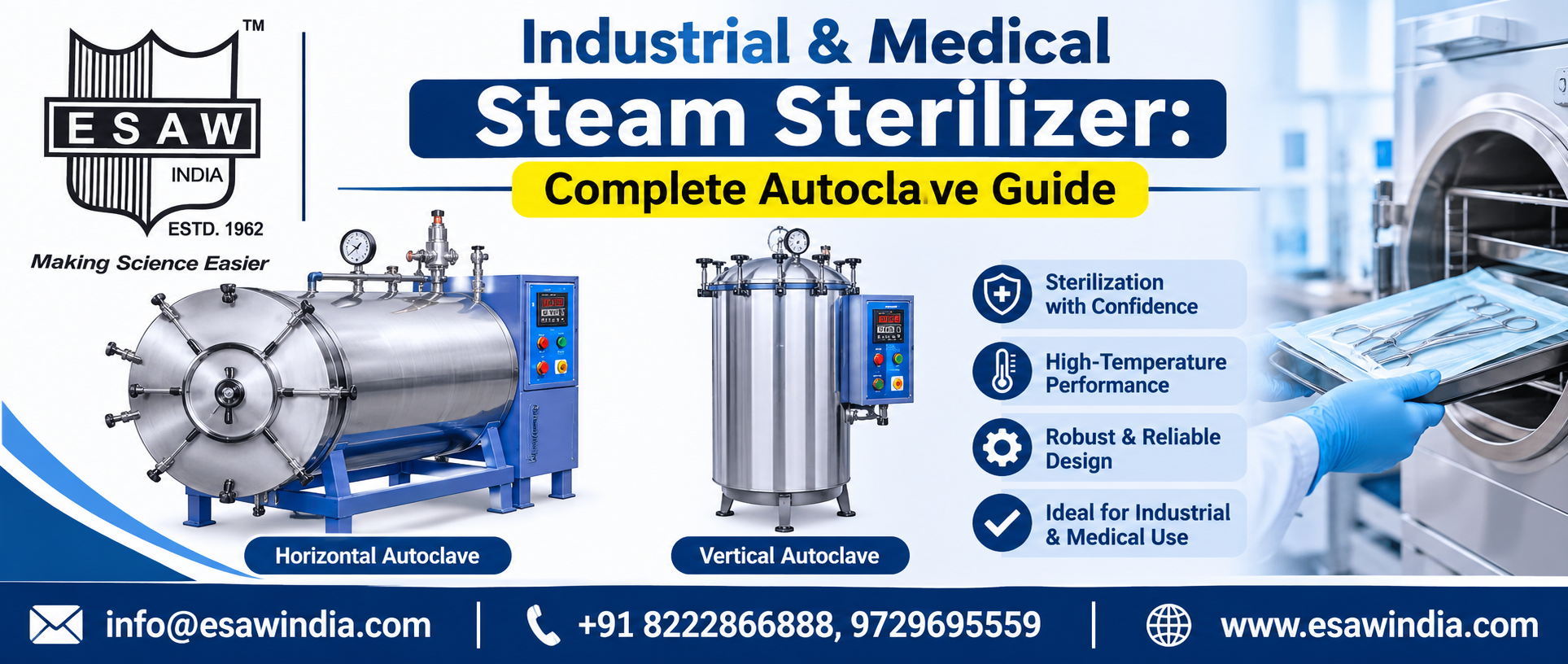
Industrial & Medical Steam Sterilizer: Complete Autoclave Guide
by Akash Dhawan
Sterilization is the absolute foundation of safety, accuracy, and hygiene across modern healthcare, scientific research, and commercial manufacturing. Whether eliminating resilient bacterial spores in a microbiology research facility or ensuring surgical instruments are completely free from pathogens before an operation, moist heat sterilization remains the global gold standard. At the center of this critical process is the Steam Sterilizer, a precision-engineered pressure vessel designed to deliver saturated steam at controlled temperatures and pressures to achieve total microbial destruction.
Understanding how an Autoclave Steam Sterilizer functions, how different configurations serve distinct environments, and what technical specifications matter most is essential for procurement managers, lab directors, hospital administrators, and industrial engineers. From compact benchtop units to massive double-door pass-through chambers, selecting the right sterilization system directly impacts operational efficiency, regulatory compliance, and long-term safety.
What is a Steam Sterilizer and How Does It Work?
A Steam Sterilizer—commonly referred to in scientific and clinical settings as an autoclave—is a sealed, high-pressure chamber that uses pressurized saturated steam to eradicate all forms of microbial life, including bacteria, viruses, fungi, and heat-resistant bacterial endospores. Unlike dry heat ovens, which rely on slow oxidation and require significantly higher temperatures over extended periods, moist heat penetrates microbial cell walls rapidly, coagulating essential proteins and enzymes within minutes.
The working principle of an Autoclave Steam Sterilizer relies on the direct physical relationship between pressure and the boiling point of water:
- Air Removal (Conditioning Phase): Air is the primary enemy of effective steam sterilization because trapped air pockets prevent steam from making direct contact with load surfaces and lower the effective temperature. Modern units remove air either through downward gravity displacement (where lighter incoming steam forces cooler, denser air out through a bottom drain) or through active pre-vacuum pulses using a dedicated vacuum pump.
- Heating and Pressurization: Once air is evacuated, saturated steam enters the chamber, raising internal pressure. At standard atmospheric pressure (0 psi / 101.3 kPa), water boils at 100°C (212°F). When pressure inside the chamber increases to 15 psi (103 kPa above atmospheric pressure), the boiling point rises to 121°C (250°F). At 30 psi, the temperature reaches 134°C (273°F).
- Sterilization Holding Phase: The load is held at the target temperature and pressure for a validated duration—typically 15 to 30 minutes at 121°C for wrapped instruments and culture media, or 3 to 10 minutes at 134°C for unwrapped surgical tools and porous loads.
- Exhaust and Drying Phase: After the exposure timer completes, steam is safely vented through a condenser or exhaust valve. In advanced systems, a post-sterilization vacuum cycle draws out residual moisture, ensuring wrapped surgical packs and porous materials emerge completely dry and ready for sterile storage.
Core Categories of Steam Sterilization Equipment
While the underlying thermodynamic science remains consistent across all models, chamber engineering, automation levels, and validation features vary dramatically depending on the working environment.
1. Laboratory Steam Sterilizer
Research institutions, university science departments, biotechnology startups, and quality control facilities depend heavily on the Laboratory Steam Sterilizer. Unlike clinical units focused primarily on metal surgical tools, laboratory sterilization involves diverse load types—including liquid nutrient media, agar solutions, borosilicate glassware, pipette tips, plastic consumables, and biohazardous waste bags.
A specialized Laboratory Steam Sterilizer incorporates dedicated cycle programs to handle liquids safely. If pressure drops too quickly after sterilizing liquid media, the superheated liquid will boil over violently, causing media loss or shattering glass flasks. Therefore, laboratory models feature slow-exhaust (liquid) cycles that gradually release pressure while cooling the load safely. Many vertical top-loading and front-loading benchtop models also include integrated PT-100 temperature probes placed directly inside reference liquid containers to guarantee core fluid temperature reaches 121°C for the full hold time.
2. Medical Steam Sterilizer
Private clinics, outpatient surgical centers, dental practices, veterinary hospitals, and diagnostic laboratories require compact, rapid-turnaround equipment that fits seamlessly into clinical workflows. A Medical Steam Sterilizer is engineered to process reusable diagnostic instruments, dental handpieces, speculums, wound-care kits, and wrapped surgical cassettes efficiently between patient appointments.
Modern medical units frequently adhere to strict international classifications such as Class B (EN 13060) standards. A Class B Medical Steam Sterilizer utilizes fractionated pre-vacuum technology, removing over 99% of ambient air before steam injection. This enables saturated steam to penetrate deep inside narrow hollow instruments (such as dental turbines and endoscopes) as well as multi-layered wrapped pouches, ensuring complete sterility without compromising delicate instrument alloys.
3. Hospital Steam Sterilizer
In large multi-specialty hospitals and Central Sterile Supply Departments (CSSD), sterilization operates on a continuous, high-throughput scale. A Hospital Steam Sterilizer is built for heavy-duty daily operation, capable of processing hundreds of surgical trays, orthopedic implant sets, linen packs, and respiratory therapy equipment across multiple shifts.
To maintain strict infection control protocols, a Hospital Steam Sterilizer is frequently designed in a double-door pass-through configuration. One door opens into the soiled decontamination zone where technicians load cleaned instruments, while the second door opens directly into the clean sterile storage and operating theater supply zone. Interlocking door mechanisms make it physically impossible to open both doors simultaneously, completely eliminating the risk of cross-contamination.
4. Industrial Steam Sterilizer
Pharmaceutical manufacturing plants, food and beverage processing facilities, nutraceutical producers, and medical device manufacturers operate under stringent regulatory frameworks such as cGMP, FDA, and ISO 13485. An Industrial Steam Sterilizer is a large-scale, custom-engineered system designed to handle massive batch volumes with complete electronic batch documentation and repeatability.
In pharmaceutical production, an Industrial Steam Sterilizer is utilized for terminal sterilization of parenteral solutions in sealed ampoules, vials, and IV bags, as well as sterilizing stainless steel filling parts, rubber stoppers, and cleanroom garments. These systems feature sanitary-grade 316L stainless steel chambers, orbital-welded piping, PLC/SCADA automation with 21 CFR Part 11 compliant data logging, and air-ballast cooling systems that prevent glass vials or flexible plastic IV pouches from deforming under differential pressure.
Comparative Overview of Steam Sterilizer Configurations
Choosing the right unit starts with matching physical orientation, capacity, and air-removal mechanisms to your facility's daily workload:
| Configuration Type | Typical Capacity Range | Primary Air Removal | Best Suited For | Key Structural Advantage |
|---|---|---|---|---|
| Vertical Top-Loading | 25 L to 175 L | Gravity / Vacuum | Laboratory Steam Sterilizer setups, microbiology labs, media prep | Compact footprint; accommodates tall flasks and biohazard buckets easily |
| Benchtop Front-Loading | 18 L to 65 L | Pre-Vacuum (Class B) / Gravity | Medical Steam Sterilizer clinics, dental offices, small labs | Fits on standard countertops; fast cycle times for wrapped instruments |
| Horizontal Single-Door | 100 L to 1,000+ L | High-Efficiency Pre-Vacuum | Mid-sized Hospital Steam Sterilizer units, animal research | Easy ergonomic cart loading for heavy surgical trays and cages |
| Horizontal Double-Door | 250 L to 5,000+ L | Multi-Pulse Pre-Vacuum | CSSD Hospital Steam Sterilizer & Industrial Steam Sterilizer plants | Physical barrier between soiled and sterile zones; maximum throughput |
Essential Construction and Engineering Standards
When evaluating any Steam Sterilizer for long-term deployment, build quality and safety engineering are non-negotiable. Because these machines operate under high thermal and mechanical stress every day, substandard materials can lead to premature corrosion, pressure leaks, or hazardous failures.
- Chamber and Jacket Metallurgy: The inner pressure chamber and steam generator should be constructed from heavy-gauge SS 304 or pharmaceutical-grade SS 316L austenitic stainless steel. SS 316L offers superior resistance to chloride-induced pitting and chemical corrosion caused by saline residues or biological fluids. Double-walled (jacketed) designs keep chamber walls preheated, minimizing condensation and accelerating drying times.
- Door Locking and Safety Interlocks: A reliable Autoclave Steam Sterilizer incorporates pressure-activated door locks that prevent unlatching under internal pressure, spring-loaded safety relief valves, low-water cut-off sensors to protect heating elements, and independent over-temperature thermal cut-offs.
- Microprocessor & PLC Control Systems: Advanced microprocessor or PLC interfaces allow operators to select pre-validated cycles—such as Wrapped Instruments, Unwrapped Tools, Liquids, Porous Fabrics, and Bowie-Dick Air Removal Tests—with a single touch. Built-in thermal printers, USB ports, and Ethernet connectivity record time, temperature, and pressure curves for every batch.
Key Factors to Consider Before Purchasing a Steam Sterilizer
- Daily Load Volume and Chamber Dimensions: Calculate your peak daily sterilization volume rather than average usage. Measure your largest instrument tray, tall Erlenmeyer flask, or industrial cart to ensure adequate clearance inside the usable chamber space.
- Load Characteristics (Solid, Hollow, Porous, or Liquid): Solid metal instruments work well in gravity-displacement models, whereas wrapped surgical kits, porous gowns, and handpieces require a pre-vacuum Autoclave Steam Sterilizer. For agar and broth preparation, ensure dedicated slow-exhaust liquid cycles are included.
- Steam Source Availability: Smaller Laboratory Steam Sterilizer and Medical Steam Sterilizer units typically include built-in electric immersion heaters, while larger Hospital Steam Sterilizer and Industrial Steam Sterilizer installations may use high-capacity integral electric generators or connect directly to centralized boiler clean-steam lines.
- Water Quality and Utility Infrastructure: Hard tap water leaves mineral scale on heaters and solenoid valves. Always pair your sterilizer with a reverse osmosis (RO) or deionization (DI) water system, and verify power supply phase requirements (single-phase vs. three-phase) before installation.
- Regulatory Compliance and Validation Support: Verify compliance with ASME Section VIII, PED, CE, ISO 13485, or EN 285 standards, and confirm availability of IQ, OQ, and PQ validation protocols for regulated environments.
Best Practices for Operation, Maintenance, and Sterility Assurance
- Thorough Pre-Cleaning: Steam cannot sterilize dirt. Blood, tissue, dried media, and chemical residues shield microorganisms from direct steam contact and must be removed via manual or ultrasonic enzymatic cleaning prior to loading.
- Proper Load Arrangement: Place items loosely on perforated stainless steel trays or wire baskets so steam circulates freely around every surface. Position hollow containers on their sides or inverted so air drains downward and condensate does not pool inside.
- Routine Chemical and Biological Monitoring: Use external autoclave indicator tape and internal Class 4–6 chemical integrator strips on every load. Run daily Bowie-Dick air removal tests on pre-vacuum Hospital Steam Sterilizer and Medical Steam Sterilizer systems, and perform weekly biological spore testing using Geobacillus stearothermophilus vials.
- Preventive Maintenance Schedule: Drain and flush the steam generator weekly to prevent sediment accumulation, wipe door gaskets daily with a lint-free cloth, replace gaskets annually, and calibrate temperature and pressure sensors regularly.
Regional Steam Sterilizer Supplier & Distribution Network
We supply precision-engineered Steam Sterilizer and Autoclave Steam Sterilizer units backed by installation guidance, calibration support, and timely spare-parts dispatch across major industrial, educational, and healthcare hubs in India and international export markets:
| Region / Territory | Key Supply Cities & Industrial / Medical Hubs Covered |
|---|---|
| North India | Ambala, Chandigarh, Delhi NCR (New Delhi, Noida, Gurugram, Faridabad, Ghaziabad), Baddi, Solan, Dehradun, Haridwar, Roorkee, Ludhiana, Amritsar, Jaipur, Lucknow, Kanpur |
| West India | Mumbai, Pune, Thane, Nashik, Aurangabad, Nagpur, Ahmedabad, Vadodara, Surat, Rajkot, Ankleshwar, Vapi, Goa |
| South India | Bengaluru, Mysuru, Hyderabad, Secunderabad, Chennai, Coimbatore, Madurai, Kochi, Thiruvananthapuram, Visakhapatnam, Vijayawada |
| East & Central India | Kolkata, Howrah, Durgapur, Bhubaneswar, Cuttack, Patna, Ranchi, Jamshedpur, Guwahati, Indore, Bhopal, Raipur |
| International Exports | Middle East (UAE, Saudi Arabia, Oman, Qatar), Africa (Kenya, Nigeria, South Africa, Egypt, Ethiopia), South & Southeast Asia (Bangladesh, Sri Lanka, Nepal, Vietnam, Malaysia, Indonesia) |
Frequently Asked Questions (FAQs)
1. What is the difference between a Steam Sterilizer and an Autoclave?
In practical laboratory, clinical, and industrial usage, the terms Steam Sterilizer and Autoclave Steam Sterilizer describe the exact same machine. Both refer to pressurized chambers that use saturated steam at elevated temperatures (typically 121°C to 134°C) to destroy microorganisms. "Autoclave" is the traditional scientific term derived from the self-locking pressure lid, while "Steam Sterilizer" is the standard regulatory and commercial terminology used in hospital CSSDs and medical device standards.
2. Why is saturated steam more effective than dry heat for sterilization?
Saturated steam carries massive latent heat energy. When steam contacts a cooler object inside the chamber, it immediately condenses into water, releasing thermal energy directly onto the microbial surface and rapidly denaturing proteins. Dry heat lacks moisture and transfers energy slowly through conduction, requiring higher temperatures (160°C–180°C) and much longer cycle times (1 to 2 hours) to achieve the same sterility assurance level.
3. Can a Laboratory Steam Sterilizer be used for medical instruments, or vice versa?
While basic unwrapped solid metal tools can be processed in either unit, each system is optimized for specific tasks. A Laboratory Steam Sterilizer includes specialized slow-exhaust cooling cycles to prevent liquid media from boiling over—a feature absent in most clinical units. Conversely, a Class B Medical Steam Sterilizer features advanced pre-vacuum air removal and vacuum drying cycles required to sterilize and dry wrapped surgical packs and narrow hollow instruments.
4. What water quality should be used in a Steam Sterilizer?
Always use distilled, deionized (DI), or reverse osmosis (RO) purified water with low total dissolved solids (TDS) and minimal chlorides. Standard tap water contains calcium, magnesium, and minerals that cause limescale deposits on heaters and sensors, while chlorides can cause stress-corrosion cracking even in high-grade stainless steel chambers.
5. How long do sterilized packs remain sterile after exiting a Hospital Steam Sterilizer?
Sterility is event-related rather than strictly time-related. As long as wrapped packs emerge completely dry from the Hospital Steam Sterilizer and are stored in clean, dry, dust-free cabinets away from moisture, tearing, or crushing, they remain sterile indefinitely until the packaging barrier is compromised.
Conclusion
Selecting the right Steam Sterilizer is a critical investment in operational safety, infection control, and regulatory compliance. Whether you require a compact vertical Laboratory Steam Sterilizer for culture media preparation, a Class B Medical Steam Sterilizer for clinical instruments, a double-door Hospital Steam Sterilizer for CSSD workflows, or a cGMP-compliant Industrial Steam Sterilizer for large-scale manufacturing, aligning chamber metallurgy, air-removal technology, and automation features with your specific load profile ensures reliable performance for years to come.
By pairing a properly specified Autoclave Steam Sterilizer with purified water supply, disciplined load arrangement, and routine biological and chemical validation, laboratories, hospitals, and industrial facilities can maintain uncompromising sterility standards across every cycle.


Leave a comment