New customers save 5% with the code GET05

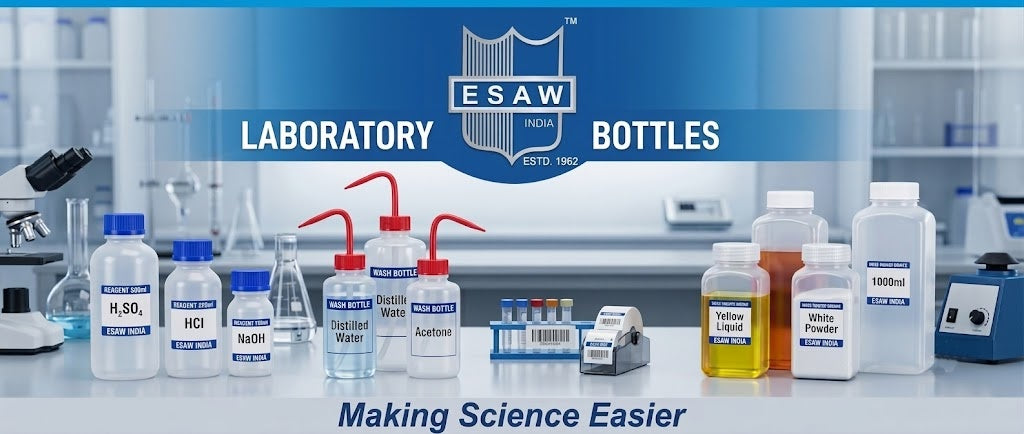
Laboratory Plasticware Bottles: Uses, Advantages, Specifications, and Applications
by Akash Dhawan
In modern scientific research, pharmaceuticals, biotechnology, and chemical testing, laboratory safety and sample integrity are non-negotiable. For decades, traditional glassware was considered the default standard. However, material science advancements—led by trusted industry pioneers like ESAW INDIA—have triggered a massive shift toward laboratory plasticware bottles. Engineered from high-purity, laboratory-grade synthetic polymers, modern lab plastic bottles offer superior durability, exceptional chemical inertia, shatter-proof safety, and long-term cost efficiency.
Whether you are managing an academic research facility, an environmental testing setup, or a high-throughput pharmaceutical QA/QC lab, selecting the correct container is vital. Manufactured under strict ISO-certified quality standards, ESAW INDIA delivers world-class lab containers trusted globally. This comprehensive guide covers everything you need to know about laboratory plasticware bottles—including technical specifications, key polymer types, real-world applications, safety advantages, and answers to frequently asked questions.
What are Laboratory Plasticware Bottles?
Laboratory plasticware bottles are precision-molded containers engineered specifically to hold, store, transport, dispense, and mix liquid reagents, solid chemicals, biological samples, and culture media.
Unlike standard consumer plastic containers, industrial lab plastic bottles from leading brands like ESAW INDIA undergo rigorous testing to ensure zero sample leaching, high thermal endurance, precise volumetric accuracy, and leak-proof sealing mechanisms under demanding conditions.
Technical Specifications: Common Polymers & Material Comparison
Selecting the right bottle starts with matching the chemical composition of your liquid or compound with accurate lab plasticware specifications. Different polymers exhibit vast differences in heat tolerance, flexibility, transparency, and chemical resistance:
| Polymer Material | Abbreviation | Operating Temperature Range | Clarity | Key Features | Primary Applications |
|---|---|---|---|---|---|
| High-Density Polyethylene | HDPE | -100°C to 120°C | Translucent | Excellent chemical resistance, high density, impact resistant | General chemical storage, acids, bases, dry powders |
| Polypropylene | PP | -5°C to 135°C | Translucent / Semi-Clear | Autoclavable, rigid, high thermal resistance, stiff structure | Media preparation, autoclaved sampling, hot liquids |
| Low-Density Polyethylene | LDPE | -50°C to 80°C | Translucent | Extremely flexible, impact resistant, squeezable | Wash bottles, squeeze dropper containers |
| Polytetrafluoroethylene | PTFE | -200°C to 260°C | Opaque White | Extreme heat/chemical inertia, non-stick surface, zero leaching | Trace metal analysis, aggressive solvents, strong acids |
| Polycarbonate | PC | -135°C to 135°C | Glass-like Clarity | Rigid, autoclavable, high impact resistance | Cell culture media storage, serum containment |
| Fluorinated HDPE | FLPE | -100°C to 120°C | Translucent | Fluorinated barrier layers to prevent solvent permeation | Organic solvents, hydrocarbons, aggressive liquids |
Understanding these lab equipment specifications prevents catastrophic chemical reactions, container deformation, or sample contamination during storage and testing routines.
Core Advantages of Laboratory Plasticware Bottles over Glassware
The industry-wide transition from traditional glass containers to engineered polymer bottles from ESAW INDIA is driven by crucial practical and operational advantages:
1. Maximum Safety & Shatter-Proofing
Glass breakage is one of the leading causes of sharp-force injuries and hazardous chemical spills in scientific facilities. Polymer containers do not shatter upon accidental drops or physical impact, drastically reducing workplace hazards and chemical exposures.
2. Lightweight and Ergonomic Transport
Polymer materials are significantly lighter than glass. Handling large volumes of chemicals in bulk or shipping samples across long distances becomes much easier and far less expensive when using lightweight plastic containers.
3. Durable HDPE Performance
HDPE lab bottles provide unmatched impact resistance and exceptional chemical inertness, making them the preferred choice for storing concentrated acids, bases, and reactive industrial compounds.
4. Extended Durability & Cost Reduction
While glass chips, cracks, or shatters easily during routine washing or handling, plastic containers exhibit long service lifespans. This durability eliminates frequent replacement costs and lowers annual laboratory overhead.
5. High Temperature & Autoclave Capability
Premium polymer options, such as Polypropylene reagent bottles, easily withstand repeated steam autoclaving cycles at 121°C under pressure, allowing efficient biological sterilization without compromising structural integrity.
Require Bulk Plasticware Bottles or Factory Pricing?
ESAW INDIA manufactures ISO-certified high-grade laboratory plasticware for export and domestic distribution.
Get EnquiryDetailed Classification: Types and Specific Uses
Laboratory workflows require specialized bottle geometries and closure mechanisms designed for specific operational needs:
                          Laboratory Plasticware Bottles
                                        │
     ┌───────────────────┬──────────────┼───────────────┬──────────────────┐
     ▼                   ▼              ▼               ▼                  ▼
Reagent Bottles     Wash Bottles   Media Bottles  Dropper Bottles    Amber Bottles
(HDPE / PP)           (LDPE)         (PP / PC)       (LDPE / HDPE)       (HDPE / PP)
1. Reagent & Chemical Storage Bottles
- HDPE lab bottles: Represent the industry standard for general laboratory reagents, concentrated acids, alkalis, and solid dry chemicals due to their dense polymer structure and high chemical resistance.
- Polypropylene reagent bottles: Preferred when high liquid clarity, thermal stability, and frequent steam sterilization are required. Premium options from ESAW INDIA feature secure leak-proof caps with inner sealing rings.
- Narrow-Mouth vs. Wide-Mouth: Narrow-mouth designs ensure controlled pouring of liquids, whereas wide-mouth designs allow easy filling, extraction of powders or viscous samples using spatulas, and thorough manual cleaning.
2. Wash Bottles
- Wash bottles are constructed from flexible LDPE and feature an integrated, angled dispensing nozzle.
- A gentle squeeze on the flexible walls produces a precise, controlled jet of liquid.
- Squeezable wash bottles are essential tools on every bench top for rinsing glassware, washing precipitates, dispensing distilled water, and applying cleaning solvents like ethanol or acetone.
3. Media Bottles
- Heavy-duty, graduated media bottles made from PP or PC are engineered specifically for tissue culture preparation, biological buffer storage, and serum preservation.
- Specialized leak-proof media bottles feature heavy-wall designs, drip-free pouring rings, clear volumetric graduations, and biocompatible materials to prevent cellular toxicity.
4. Dropper Bottles & Specialized Containers
- Dropper Bottles: Precision-engineered squeezable containers designed for precise, drop-by-drop delivery of indicators, stains, and titrants.
- Amber Plastic Bottles: Infused with UV-blocking additives to shield light-sensitive chemicals, biological compounds, and vitamins from photochemical degradation.
Major Industrial & Scientific Applications
Laboratory plasticware bottles manufactured by ESAW INDIA are indispensable tools across a vast range of global sectors:
- Pharmaceutical & Biotechnology Testing: Critical for sterile cell culture media preparation, drug stability studies, buffer formulation, and diagnostic reagent packaging.
- Chemical Research & Quality Assurance: Storing raw chemicals, acids, bases, titrants, and standard reference materials without risking container leaching or etching.
- Environmental & Water Analysis: Ideal for field collection of soil, wastewater, river water, and drinking water samples. Their lightweight, non-breakable construction guarantees sample transport safety.
- Food, Beverage & Agriculture: Used in microbiological testing, nutritional composition analysis, and liquid ingredient sampling.
- Academic & Educational Institutions: Provides a safe, shatter-proof environment for secondary schools, colleges, and university laboratories, minimizing injury risks for students.
Care, Maintenance, and Sterilization Best Practices
To maximize bottle lifespan and preserve sample purity, adhere to these maintenance guidelines:
- Washing & Detergents: Wash containers using neutral pH, non-abrasive laboratory detergents. Avoid wire brushes or harsh scouring pads that scratch interior polymer surfaces.
- Autoclaving Procedures: When autoclaving Polypropylene reagent bottles, always unscrew or completely loosen the caps. Autoclaving tightly sealed bottles creates a vacuum during cooling that collapses or deforms the container.
- Temperature Limits: Never subject LDPE or standard HDPE containers to steam autoclaving temperatures (>120°C), as this causes immediate melting and warping.
- Chemical Compatibility Checks: Always cross-reference chemical charts before storing organic solvents like acetone, chloroform, or toluene in standard plastic containers.
Frequently Asked Questions (FAQs)
1. Are all plastic laboratory bottles autoclavable?
No. Only specific polymers like Polypropylene (PP), Polycarbonate (PC), and PTFE can be safely autoclaved at standard parameters (121°C at 15 psi for 15–20 minutes). LDPE and HDPE bottles melt or deform under high steam temperatures.
2. How do I decide between HDPE and PP containers?
Choose HDPE lab bottles when storing concentrated acids, alkalis, or chemicals at room temperature or low temperatures down to -100°C. Choose Polypropylene reagent bottles when you require high liquid clarity, higher operating temperatures up to 135°C, or steam autoclaving.
3. Can organic solvents be safely stored in lab plastic containers?
Yes, provided you choose compatible polymers. Fluorinated HDPE (FLPE), PTFE, and PFA offer excellent solvent resistance. Standard LDPE or HDPE containers can absorb organic solvents like toluene or acetone, leading to swelling or degradation.
4. Why choose ESAW INDIA for laboratory plasticware bottles?
ESAW INDIA is a leading global manufacturer and exporter of lab equipment and plasticware with over 60 years of manufacturing excellence. All ESAW INDIA plastic products are ISO-certified, crafted from medical-grade polymers, engineered for precision, and designed to meet strict international standards.
Conclusion
Choosing the appropriate laboratory plasticware bottles is an essential step in building a safe, efficient, and cost-effective scientific environment. By sourcing from reliable manufacturers like ESAW INDIA, matching your chemical reagents with correct lab equipment specifications, and utilizing high-performance HDPE lab bottles for cold storage, Polypropylene reagent bottles for autoclaved media, and versatile wash bottles or media bottles for daily bench tasks, you guarantee long-term precision and sample integrity across every experiment.
Have Questions or Require a Direct Quote?
Contact the ESAW INDIA technical support team to get customized product recommendations and quotations.
Get Enquiry


Leave a comment