Skip to content
Currency

New customers save 5% with the code GET05

🔹Image ALT Tags (SEO-Focused):

"Fluorescence Microscope for Research and Diagnostics"

"Buy Fluorescence Microscope for School and Lab Use"

"Affordable Fluorescence Microscope India for Biology Students"

"ESAW Fluorescent Lab Microscope for Medical Colleges"

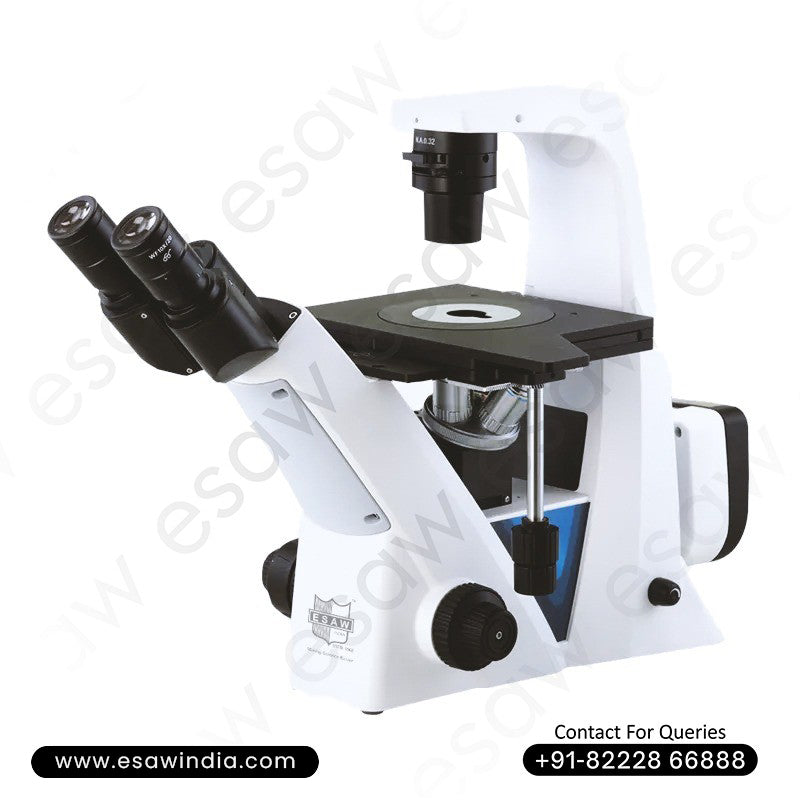
Buy Fluorescence Microscope – ESAW High-Precision Imaging Microscope for Medical & Research Labs

Model No : IMX-400

Regular price Rs. 899,999.00
Tax included.Shipping calculated at checkout.
Quantity:
Estimated Delivery:
Guaranteed Safe Checkout
Delivery Period

3-5 Working Days

Replacement

3 Days Replacement as standard, Free of Cost

Dedicated Support

Support from 9:30 AM to 6:00 PM everyday

Description

    Technical Specifications

    Microscopy Mode
    Epi-Fluorescence & Transmitted Brightfield/Phase Contrast
    Excitation Light Source
    High-Intensity LED or Mercury Arc Lamp (User Choice)
    Observation Head
    Siedentopf Trinocular (Digital Imaging Ready)
    Objectives
    Plan Achromatic Fluorescence Objectives (High NA)
    Filter Turret
    Multi-Position, easily switchable (DAPI, FITC, TRITC standard)
    Stage
    Precision Double Layer Mechanical Stage

    Significance: Unlocking Sub-Cellular Visualization

    The **Fluorescence Microscope** is a cornerstone of modern life science, providing visualization capabilities far beyond traditional light microscopy. It exploits the principle of **fluorescence**, where specific molecules (fluorophores) tagged to biological structures absorb high-energy light and emit lower-energy, visible light. This critical process allows researchers to highlight target components—such as a specific protein, DNA sequence, or organelle—against a completely dark background, dramatically increasing the **contrast and specificity** of the image.

    This microscope is vital for qualitative and quantitative analysis, enabling non-invasive observation of dynamic cellular processes, making it essential for drug discovery and disease pathology worldwide. Our model is built for high light efficiency and precise chromatic aberration correction, ensuring the capture of even weak fluorescent signals.

    Applications: Diverse Use Cases in Biology and Medicine

    Due to its high sensitivity and selectivity, the Fluorescence Microscope is employed across a vast spectrum of scientific fields, particularly targeting the rapidly evolving biotech and healthcare sectors in India and internationally:

    • **Immunohistochemistry & Immunofluorescence:** Critical for locating and quantifying specific proteins and antigens in tissue samples and fixed cells, widely used in cancer research and diagnostics.
    • **Live/Fixed Cell Assays:** Observing cell viability, proliferation, and migration in real-time, often used in pharmacology for drug efficacy testing.
    • **Microbiology and Virology:** Identifying and tracking infectious agents tagged with fluorescent dyes within host cells.
    • **Genetic Mapping (FISH):** Using Fluorescence In Situ Hybridization to map precise locations of genes on chromosomes, forming the basis of many genetic diagnostic tests.
    • **Environmental Science:** Analyzing micro-organisms and particles in water and soil samples.

    Uses: Strategic Deployment in the Indian Market

    In India, where government initiatives are boosting R&D infrastructure, our **Fluorescence Microscope** offers a high-performance yet cost-effective solution for institutions from Kolkata's research hubs to Mumbai's pharmaceutical giants and Hyderabad's major clinical labs. The **Trinocular port** ensures seamless digital integration, meeting the high standards required for international publication and documentation.

    The market demand spans across various Indian states, including **Maharashtra (Pune, Mumbai)** for pharma, **Karnataka (Bangalore)** for IT/Biotech convergence, **Delhi NCR** for academic institutions, and **Tamil Nadu (Chennai)** for medical colleges, where the ability to perform high-resolution molecular imaging is non-negotiable for competitive research grants and quality education.

    Product Keywords

    • Epi-Fluorescence Microscope for Research
    • Trinocular Fluorescence Microscope India
    • Microscope for Immunofluorescence Price
    • LED Fluorescence Excitation System
    • Buy Plan Fluor Objectives Microscope
    • Biological Fluorescence Imaging Equipment

    Frequently Asked Questions (FAQ)

    1. What is the main difference between Epi- and Transmitted Fluorescence?

    Epi-Fluorescence (Reflected) is standard where the objective serves as both the condenser and the light collector, viewing fluorescence from the top surface. Transmitted light is generally only used for Brightfield observation on a standard upright Fluorescence Microscope.

    2. Which objective is best for fluorescence imaging?

    High-quality **Plan Fluor or Plan Apochromat objectives** are preferred. They have high Numerical Aperture (NA) to collect the maximum amount of weak fluorescent emission light and are specifically corrected to minimize chromatic aberrations across the excitation and emission wavelengths.

    3. How long do the filter cubes last?

    The filter cubes (containing the excitation, emission filters, and dichroic mirror) are passive components and do not degrade unless physically scratched or exposed to extreme heat/moisture. They are generally considered permanent unless a new fluorescence dye (requiring different wavelengths) is introduced.

    4. Is the Trinocular head essential for every lab?

    While binocular is sufficient for visual observation, the **Trinocular head is essential** for modern research. It allows for the attachment of a high-resolution camera, enabling digital documentation, quantitative analysis (like intensity measurements), and image sharing, which are vital for publishing research.

    5. How does this upright microscope handle liquid samples, compared to an inverted one?

    This **Upright Fluorescence Microscope** is ideal for viewing fixed slide preparations, smears, or small drop samples, where the objective is above the stage. For large culture vessels, live cell dynamics, or liquids viewed through the bottom of a flask, an **Inverted Fluorescence Microscope** is more suitable.

Shopping cart

Your cart is currently empty.

Continue shopping